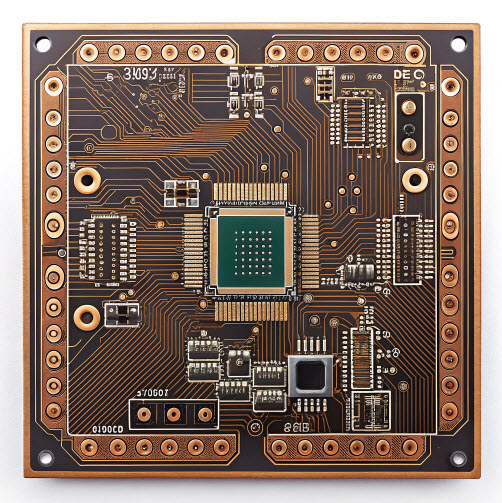
Discover the complete history of PCB manufacturing — from early printed-wiring experiments and Paul Eisler’s breakthrough to WWII adoption, multilayer boards, surface-mount revolution, and the modern automated factories driving today’s electronics. Learn how PCB manufacturing evolved, key technologies, and why it matters for design and production.
Printed circuit boards (PCBs) are the invisible backbone of every modern electronic device. From the radio in Paul Eisler’s workshop to the dense multi-layer boards inside smartphones and medical equipment, PCB manufacturing transformed electronics from hand-wired curiosities into mass-produced, reliable systems. This article traces that transformation — the key inventions, manufacturing milestones, assembly breakthroughs, environmental and regulatory shifts, and modern trends shaping PCB fabrication and assembly today.
Early precursors: printing conductive paths (1900s–1930s)
Before the phrase “printed circuit board” existed, inventors were already experimenting with ways to replace bulky point-to-point wiring with printed conductive paths. In the 1920s and 1930s a series of patents and experiments described “printed wiring” — printing conductive inks or laying metal strips on insulating substrates to form repeatable electrical connections. These early efforts were foundational: they showed it was possible to move interconnects from loose wires into repeatable, machine-friendly patterns, paving the way for the PCB as we know it.
Paul Eisler and the birth of the printed circuit (1936–1940s)
The person most widely credited with the invention of the modern printed circuit is Austrian engineer Paul Eisler, who, while living and working in the UK in the mid-1930s, developed and filed patents for a printed circuit concept as part of a radio project. Eisler’s approach used copper foil and an insulating substrate to carry printed traces and mount components — a radical departure from hand-wiring. His work in the late 1930s and early 1940s is widely cited as the moment the printed circuit idea matured into a practical technology.
Although Eisler’s inventions predated World War II, the conflict accelerated adoption. Military electronics needed reliability, compactness, and repeatable manufacturing — conditions where PCBs excel. During the war, specialized multilayer printed circuits were used in naval mines and other military gear, showing the technique could handle complex, rugged applications.
Post-war expansion and industrialization (1940s–1950s)
After WWII, PCBs moved from niche military use into commercial and industrial electronics. The post-war electronics boom — radios, televisions, avionics, and nascent computing — demanded faster production and consistent quality. PCB fabrication methods matured: copper-clad laminates replaced ad-hoc substrates; etching processes were adapted to remove unwanted copper; and designers began using standardized layouts and materials.
By the 1950s the industry had started producing single- and double-sided boards in volume. The repeatability of PCB fabrication enabled new product designs (smaller, more complex, and more reliable) and set the stage for mass consumer electronics.
Key manufacturing processes that emerged
Modern PCB fabrication grew from a handful of repeatable processes that still define the factory floor:
- Substrate lamination: bonding insulating materials (phenolics, FR-2, then FR-4 fiberglass epoxy) to copper foil to create copper-clad boards.
- Imaging & photolithography: transferring circuit artwork from film to photoresist on copper, enabling precise trace patterns.
- Etching: chemically removing exposed copper to reveal the circuit traces.
- Drilling & plating: mechanically or laser-drilling holes and plating through-holes to create interlayer connections.
- Solder mask & silkscreen: applying protective masks and component identifiers to finished boards.
These steps matured throughout the 1950s and 1960s and became automated and standardized as demand grew.
Multilayer PCBs and miniaturization (1950s–1970s)
The ability to stack layers and connect them with plated through-holes (vias) was a major leap. Multilayer PCBs allowed designers to separate power, ground, and signal planes across layers, cut noise, and dramatically increase circuit density — essential for radar, avionics, and later computing systems. With multilayer techniques came tighter tolerances, improved materials (high-grade laminates), and new quality control practices that moved PCB fabrication from craft to high-precision manufacturing.
Surface-Mount Technology (SMT) — the assembly revolution (1960s–1990s)
One of the most transformative developments in PCB assembly was surface-mount technology (SMT). Originating in the 1960s under names like “planar mounting,” SMT allowed components to be mounted directly to the board surface rather than inserting leads through holes. Early demonstrations (including IBM and aerospace projects) proved SMT’s value for miniaturization and automation. Throughout the 1970s and 1980s, SMT matured into an industry standard — pick-and-place machines, solder paste printing, and reflow soldering enabled incredibly fast, reliable assembly of dense boards. By the 1990s, SMT dominated high-volume electronics assembly and made today’s compact mobile devices possible.
Automation, testing, and quality control (1980s–2000s)
As boards got smaller and denser, factories invested in automation and inspection:
- Automated Optical Inspection (AOI) scanned solder joints and component placement for defects.
- In-Circuit Testing (ICT) and Flying Probe testers verified component values, shorts, and opens.
- X-ray inspection allowed non-destructive examination of hidden solder joints (e.g., BGAs).
- Statistical Process Control (SPC) and ISO standards professionalised quality and traceability.
These tools turned PCB manufacturing into a high-yield, repeatable discipline, shrinking time-to-market and enabling complex electronics in medical, automotive, aerospace, and consumer products.
Environmental and regulatory shifts — the RoHS era (2000s)
In the early 2000s, regulators and consumers pushed electronics makers to reduce hazardous substances. The European RoHS (Restriction of Hazardous Substances) directive, adopted in 2003 and enforced from July 1, 2006, limited the use of lead, mercury, cadmium, hexavalent chromium, and certain flame retardants in electronics. RoHS forced big changes across PCB manufacturing: the industry adopted lead-free solders (higher melting points), adjusted manufacturing profiles, and requalified materials and components. RoHS had a global ripple effect — manufacturers worldwide updated processes to retain EU market access.
High-density interconnect (HDI), BGAs and modern packaging (2000s–2010s)
As smartphones and portable devices surged, HDI PCBs, microvias, ball-grid array (BGA) packages, and chip-scale packages became commonplace. HDI techniques rely on laser drilling, fine line imaging, and advanced materials to support dense routing and stacked vias. These advances let manufacturers pack more functionality into smaller footprints while meeting power and thermal constraints.
Simultaneously, automated assembly lines became ever faster and more precise, leveraging vision-guided pick-and-place machines and sophisticated reflow profiles to handle tiny components and complex boards.
Globalisation, reshoring, and supply-chain resilience (2010s–2020s)
PCB manufacturing is a truly global industry: design houses in North America and Europe often outsource fabrication and assembly to specialist plants in Asia, Eastern Europe, and elsewhere. This global supply chain delivered cost reductions and scale, but also exposed companies to geopolitical, logistical, and quality risks. In response, many manufacturers adopted dual-sourcing strategies, regionalisation of key suppliers, and investments in local production sites — a trend amplified after supply shocks in the late 2010s and early 2020s.
At the same time, national strategies (e.g., incentives to boost domestic electronics capabilities) spurred growth in regional PCB capacity and investment in cutting-edge facilities.
Modern PCB manufacturing: digital workflows and Industry 4.0
Today’s PCB shops are digital and connected:
- DFM (Design for Manufacturing) rules are applied early to avoid costly redesigns.
- CAM (Computer-Aided Manufacturing) tools convert board designs into machine code for imaging, drilling, and routing.
- Automated inventory, MES (Manufacturing Execution Systems), and IoT sensors track throughput, fault rates, and yield in real time.
- Additive manufacturing and rapid prototyping shorten development cycles — quick-turn PCB prototypes can be produced in days.
Together, these technologies slash time-to-market while improving yield and traceability for safety-critical applications in medical, aerospace, and automotive sectors.
Quality, standards, and industry certifications
Reliable PCB manufacturing depends on standards and qualifications. Some of the most important include:
- IPC standards (design, assembly, and inspection guidelines).
- ISO 9001 quality management systems.
- Sector certifications for aerospace, defence, and medical manufacturing (which require strict process controls, documentation, and traceability).
These standards make it possible for OEMs to trust contract manufacturers with mission-critical assemblies and simplify procurement across industries.
Challenges and sustainability in PCB manufacturing
Despite huge progress, the PCB industry faces ongoing challenges:
- Material and process complexity: New designs demand exotic laminates, buried vias, and tight tolerances that increase fabrication cost and complexity.
- Environmental concerns: Manufacturing chemicals, waste etchants, and end-of-life electronics require better recycling and cleaner processes.
- Skilled labour: Advanced manufacturing needs trained technicians, engineers, and process specialists — a talent pipeline manufacturers must cultivate.
Regulatory frameworks (like RoHS and evolving global standards) plus corporate sustainability initiatives are pushing the industry toward greener processes, improved recycling, and safer chemical handling. Manufacturers who invest in eco-friendly processes and circularity are better positioned for long-term competitiveness.
Why PCB manufacturing history matters to designers and buyers
Understanding the history of PCB manufacturing helps teams make smarter choices:
- Design for Manufacture (DFM): Knowledge of fabrication limits (min trace/space, drill sizes, via types) avoids costly redesigns.
- Material selection: Choosing the right substrate (e.g., FR-4 vs high-TG laminates or ceramic substrates) impacts reliability and thermal performance.
- Assembly strategy: Deciding between through-hole and SMT, or when to use BGAs and HDI, affects cost, testability, and repairability.
- Supplier selection: Knowing industry capabilities and certifications helps buyers choose partners who can meet quality and regulatory needs.
PCB manufacturing isn’t just a production step — it’s a key architectural decision that shapes product success.
The future: flexible, printed, and smarter boards
Looking forward, several trends are gaining traction:
- Flex and rigid-flex PCBs for wearable and space-constrained applications.
- Printed electronics and additive techniques for specialized sensor and IoT devices.
- Embedded components and system-in-package approaches that further shrink assemblies.
- AI and advanced process control to optimise yield and predict faults before they happen.
As designs push into new applications — wearables, EVs, implantables — PCB manufacturing will continue evolving with materials science, automation, and sustainability at its core.
Summary: From hand-wired sets to automated precision
PCB manufacturing evolved from early printed wiring experiments through Paul Eisler’s pioneering ideas, wartime adoption, post-war industrialisation, the surface-mount revolution, and the digital automation of modern factories. Each step reduced size, increased reliability, and enabled new products. Today’s PCB ecosystem blends high-precision fabrication, automated assembly, stringent quality systems, and environmental regulation — and it’s still changing fast.
Work with an experienced UK electronics manufacturer: Roscan Electronics
If you need PCB manufacturing, assembly, prototyping, or full electromechanical product build in the UK, consider working with a proven contract manufacturer. Roscan Electronics has delivered quality electronics since 1977 and offers PCB manufacturing and assembly, cable & harness manufacture, and complete box-build services from their facility in Wokingham, Berkshire. Roscan is ISO 9001 approved and their engineers hold IPC assembly and cable qualifications — a strong fit for defence, aerospace, medical and commercial electronics projects. Roscan Electronics
Roscan Electronics Ltd
Unit 14 Marino Way, Hogwood Lane Industrial Estate, Finchampstead, Wokingham, Berkshire RG40 4RF
Tel: 0118 973 7287
Email: enquiries@roscan.co.uk. Roscan Electronics
Need a prototype, quick-turn PCB assembly, or a trusted partner for volume manufacture? Contact Roscan Electronics today for a free quotation and expert advice on design for manufacture, RoHS compliance, and assembly strategy. Their team can help take your design from Gerbers to a tested, boxed product — on time and to the standards your industry requires.
Frequently Asked Questions About the History of PCB Manufacturing
1. What is a PCB and why was it invented?
A printed circuit board (PCB) is a flat, insulating board that supports and electrically connects components using conductive copper tracks.
PCBs were invented to replace unreliable and labour-intensive point-to-point wiring, which made early electronics bulky, inconsistent, and prone to failure. The PCB introduced standardisation, compactness, and mass-manufacturability — all essential for modern electronics.
2. Who invented the printed circuit board?
The modern PCB is most closely associated with Paul Eisler, an Austrian engineer who developed and patented his printed circuit system in the 1930s while working in the UK. Though earlier inventors experimented with printed wiring concepts, Eisler’s work is considered the first truly practical PCB implementation.
3. What materials were early PCBs made from?
The earliest PCBs used materials such as:
- Bakelite or other phenolic resins
- Paper laminates
- Simple copper foils
These provided basic insulation and mechanical strength. Today’s PCBs typically use FR-4 fibreglass epoxy laminates, offering far greater durability, thermal resistance, and electrical stability.
4. When did PCBs become widely used?
PCBs became commercially widespread after World War II, when military demand for reliable, compact electronics accelerated the advancement of PCB technology. By the 1950s, PCBs were common in consumer radios and televisions, and by the 1960s, they were standard in almost all commercial electronic devices.
5. How did multilayer PCBs revolutionise electronics?
Multilayer PCBs introduced the ability to stack conductive layers and connect them using plated through-holes (vias). This allowed:
- Far higher circuit density
- Cleaner power distribution
- Reduced electromagnetic interference
- Miniaturisation of electronic devices
These boards enabled the development of computers, communication systems, and later, compact mobile and medical devices.
6. What is the significance of Surface-Mount Technology (SMT)?
Surface-Mount Technology emerged in the 1960s and became mainstream by the 1980s and 1990s. It allowed electronic components to be soldered directly onto the surface of PCBs rather than inserted through holes.
Benefits included:
- Smaller and lighter assemblies
- Faster automated production
- Higher component density
- Greater electrical performance
SMT is now the dominant assembly method used globally.
7. How did RoHS impact PCB manufacturing?
The RoHS (Restriction of Hazardous Substances) directive, enforced in 2006, required the removal of lead, mercury, cadmium, and other substances from electronic products. PCB manufacturers had to:
- Transition to lead-free solder
- Adjust reflow temperatures and solder profiles
- Requalify materials and components
- Enhance traceability and documentation
RoHS reshaped the global electronics industry and drove safer, more environmentally friendly manufacturing practices.
8. What are HDI PCBs, and why are they important?
High-Density Interconnect (HDI) PCBs use very fine traces, microvias, and multilayer structures to support extremely complex circuits in tight spaces. They are crucial for:
- Smartphones
- Tablets
- Wearables
- Medical devices
- Automotive safety systems
HDI technology makes it possible to fit advanced computing capability into handheld devices.
9. What role does automation play in modern PCB manufacturing?
Modern PCB fabrication and assembly rely heavily on automation, including:
- Automated Optical Inspection (AOI)
- Pick-and-place robotics
- Laser drilling
- Computer-controlled etching and plating
- X-ray inspection
Automation improves speed, accuracy, yields, and consistency — essential for sectors like aerospace, defence, and medical electronics.
10. What are the main types of PCBs used today?
Today’s electronics rely on a wide range of PCB types, such as:
- Single-sided PCBs
- Double-sided PCBs
- Multilayer PCBs
- HDI PCBs
- Rigid-flex and flexible PCBs
- Metal-core PCBs (often used in LED lighting)
Each serves different performance, cost, and reliability requirements.
11. How are PCBs likely to evolve in the future?
Future PCB technology is expected to feature:
- More flexible and stretchable materials
- Printed electronics using conductive inks
- Embedded passives and active components
- Advanced thermal solutions for EVs and high-power computing
- AI-driven manufacturing optimisation
- Greater sustainability and recyclability
As devices become more integrated and compact, PCB manufacturing will continue blending materials science with advanced automation.
12. Why is understanding PCB manufacturing history useful?
Understanding the evolution of PCB manufacturing helps engineers, buyers, and product developers:
- Design more cost-effective boards
- Choose appropriate materials and technologies
- Ensure manufacturability and regulatory compliance
- Select the right PCB fabrication partner
- Predict future trends and plan product roadmaps
The history of PCB manufacturing is ultimately the history of modern electronics innovation.
13. Where can I get PCB manufacturing and assembly in the UK?
If you are looking for a reliable UK-based electronics manufacturer with decades of experience, Roscan Electronics provides PCB assembly, prototyping, cable harness manufacture, and full box-build services.
Roscan Electronics Ltd
Unit 14 Marino Way, Hogwood Lane Industrial Estate, Finchampstead, Wokingham, Berkshire RG40 4RF
Phone: 0118 973 7287
Email: enquiries@roscan.co.uk
Website: roscan.co.uk
Contact Roscan Electronics today for expert advice, fast prototyping, and high-quality PCB assembly tailored to your industry.