
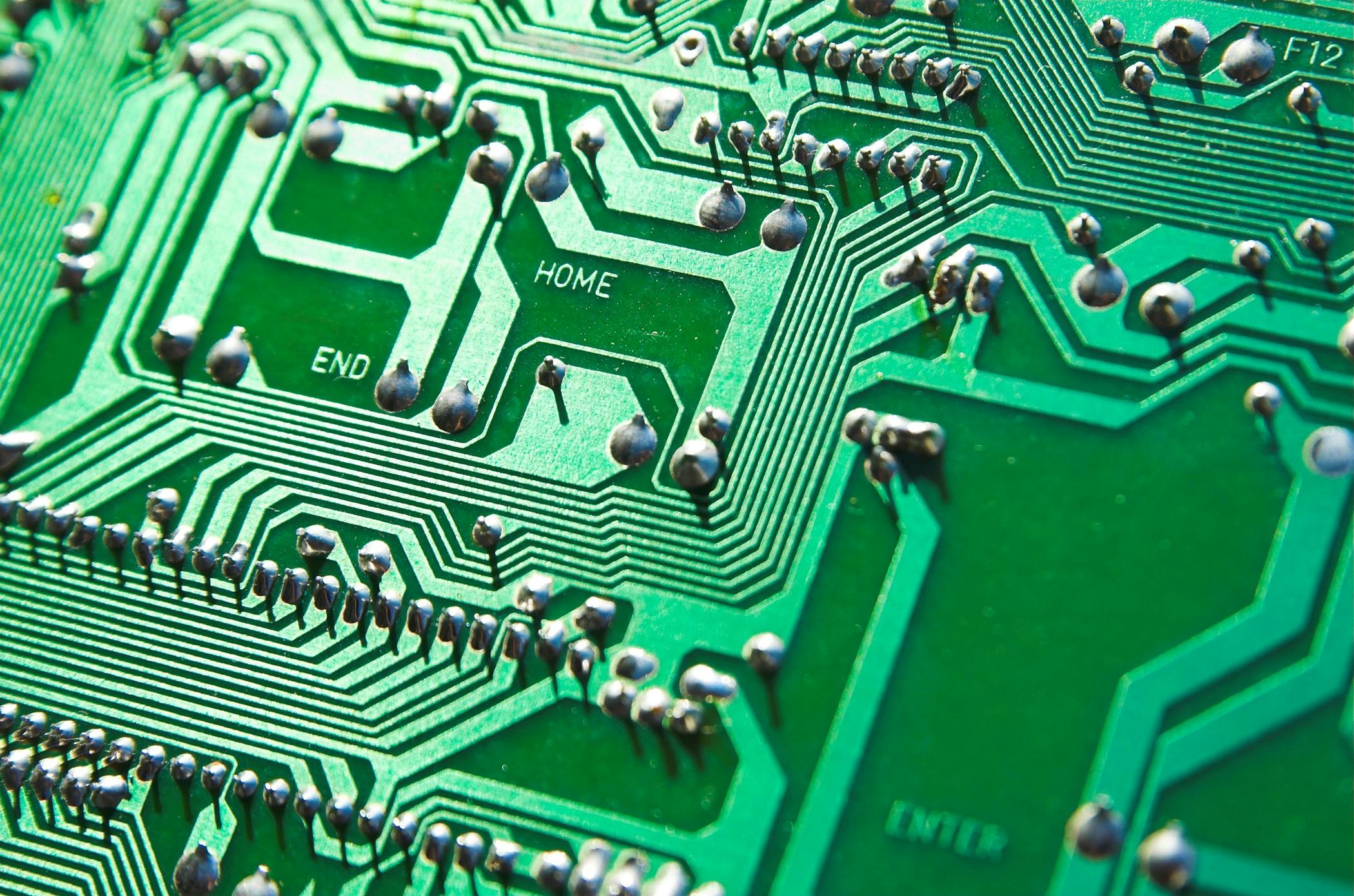
The PCB assembly process
Printed Circuit Board (PCB) assembly is the backbone of modern electronics manufacturing. Whether it’s a single prototype or a production run of thousands, a consistent, well-controlled assembly process is essential to deliver reliable, high-performing products. In this article we’ll walk through the PCB assembly process step-by-step, and show how an experienced UK contract manufacturer — Roscan Electronics — applies industry best practices (SMT, through-hole, BGA, inspection and test, box-build, and quality controls) to turn bare boards into finished electronics. The goal is practical, SEO-friendly guidance for engineers, procurement teams and product managers searching for “PCB assembly services”, “PCB assembly UK”, “SMT assembly”, “contract electronics manufacturing” and related keywords.
Quick snapshot: Roscan Electronics is an established UK contract electronics manufacturer (based in Wokingham/Finchampstead) offering PCB manufacturing, SMT and through-hole PCB assembly, cable & harness manufacture, and electromechanical/box-build services — backed by ISO 9001 and IPC-trained engineers.
1. Project kick-off: from BOM and Gerbers to assembly readiness
Any successful PCB assembly project starts long before parts hit the line. Two things you must supply — and that the manufacturer will verify — are:
- Design files: Gerber/ODB++/IPC-2581 files, fabrication notes, and mechanical drawings.
- Bill of Materials (BOM): Reference designators, manufacturer part numbers, approved alternates, required part conditions (taped & reeled, cut-tape, tray), and any special handling notes (moisture sensitivity levels, ESD requirements).
At this stage Roscan’s engineers perform a formal design for manufacturability (DFM) review and materials review to identify potential placement problems, package mismatches, or lone-part supply risks. Early DFM catches issues that would otherwise add cost or cause rework during assembly. Roscan highlights this as a standard part of their PCB assembly workflow.
SEO tip: If you’re searching for “PCB assembly services UK” or “DFM PCB assembly”, include BOM and Gerber readiness in the same query — manufacturers often list these as quoting prerequisites.
2. Component procurement and supply chain management
Once the BOM is verified, the next step is component sourcing. For contract manufacturers, reliable supplier relationships and approved sourcing strategies are essential. Key choices here:
- Customer-supplied parts (consignment) vs manufacturer-procured parts. Many customers supply long-lead or highly specified parts; the manufacturer sources the remainder.
- Approved vendors and counterfeit mitigation. Reputable CM’s (like Roscan) work with approved suppliers and maintain traceability to reduce counterfeit risk.
- Moisture-sensitive components: Components such as BGAs and QFNs often have moisture sensitivity requirements and must be baked or stored in dry cabinets before reflow.
Roscan emphasises procurement and approved suppliers as part of its PCB manufacturing and assembly services, which helps customers manage lead times and quality.
3. Solder paste stencilling (SMT paste application)
The assembly core for surface mount technology (SMT) begins with solder paste printing:
- A stainless steel stencil (or laser stencil) aligned to the PCB applies solder paste to each SMD pad.
- Automated stencil printers perform alignment, controlled squeegee speed and pressure to ensure consistent paste volume.
- A paste inspection (optional) or process control step checks paste deposition quality to prevent insufficient/excessive solder.
Specialist assembly providers — including Roscan — call out solder paste printing as a critical quality step and use automated paste printing equipment to maintain repeatability.
4. Pick & place (component placement)
After printing, boards move to the pick-and-place operation:
- High-speed pick & place machines place thousands of components per hour with optical/laser alignment for sub-millimetre accuracy.
- For very small components (0201, 01005) and bottom-terminated devices (BGA, QFN) manufacturers use precision feeders and camera alignment.
- Roscan specifically notes investment in pick & place capabilities to place components from μBGA and 0201 up to computer-assisted hand placement for larger or awkward parts.
Best practice: segregate delicate components and include fiducials on the board to improve placement accuracy and vision system performance.
5. Reflow soldering (SMT reflow profile)
Placed boards go through a reflow oven:
- Reflow ovens heat boards through controlled zones (preheat, soak, reflow, cooling) following a thermal profile matched to the solder paste and component MSL ratings.
- Proper profiling prevents tombstoning, delamination, and thermal damage to components.
- BGA/CSP reflow requires tight thermal control and often nitrogen atmosphere for high-reliability assemblies.
Roscan invests in correct placement, reflow and inspection hardware to handle BGAs and other advanced packages. Their site highlights capability to manage BTC components and the inspection needed for these devices.
6. Through-hole (PTH) processes and mixed-technology assembly
Even in predominantly SMT assemblies many boards require through-hole soldering for connectors, large power components or legacy parts:
- Selective soldering (robotic or selective wave) targets through-hole joints without disturbing nearby SMT.
- Wave soldering is used for batch processing of through-hole heavy boards, though selective or hand soldering remains for complex or delicate assemblies.
- Roscan provides lead-free PTH facilities, automatic lead cropping and wave soldering for legacy or mixed-technology assemblies.
7. Inspection: optical, automated and X-ray
Inspection prevents defective boards from advancing to test or final assembly:
- Automated Optical Inspection (AOI) checks solder joints, component presence/absence, polarity and gross misalignments after reflow.
- Automated X-ray inspection (AXI) is used for hidden joints (BGA, QFN) where solder volume can’t be seen.
- Manual optical inspection or microscope checks remain part of visual quality assurance, especially for prototypes or hard-to-inspect features.
Roscan’s investment in inspection hardware and inspection at multiple stages is highlighted as part of their quality control strategy. For BGAs and BTC components they emphasise the need for specialist placement and inspection equipment.
8. Functional test and in-circuit testing (ICT)
After inspection, boards typically move to testing:
- In-Circuit Test (ICT) uses bed-of-nails fixtures to probe nets for shorts/opens, component values and solder integrity.
- Functional Test (FCT) runs the board under powered conditions with simulated loads to confirm expected behavior (firmware, sensors, communications).
- For complex electromechanical products, manufacturers also perform environmental or burn-in testing to reveal early life failures.
Roscan offers full test facilities in-house, enabling both mechanical and electrical testing of assemblies — a capability often required for aerospace, defence, and medical sectors.
9. Rework and repair
No process is perfect — rework is an important controlled step:
- Rework stations with hot air and infrared tools are used for component removal/replacement and localized reflow.
- Repaired boards re-enter inspection and test cycles to ensure repair efficacy.
- Traceability: reputable contract manufacturers log rework, reason codes and corrective actions, which supports continuous improvement.
Roscan highlights computer assisted hand placement and dedicated rework capability for one-off or complex repairs.
10. Conformal coating, potting and encapsulation (if required)
Some applications require extra environmental protection:
- Conformal coating protects against moisture, dust and vibration.
- Potting/encapsulation provides robust protection for harsh environments.
- These steps are usually performed after final test and before box-build depending on the product specification.
If you need conformal coating, ask your CM about material options (acrylic, silicone, urethane) and test certifications.
11. Cable & harness assembly, box-build and final assembly
Many PCBs are not stand-alone: they are assembled into mechanical housings, wired into cable harnesses or combined with other electromechanical parts:
- Cable & harness manufacture requires crimping, soldering, electrical continuity test and mechanical assembly.
- Box-build (full product build) integrates PCBs, enclosures, displays, switches and final functional verification.
- Roscan lists cable & harness manufacture and electromechanical assembly among its core services, offering full product builds from prototype to production.
12. Quality management, certifications and traceability
Quality systems and traceability are decisive factors when choosing a PCB assembly partner:
- Look for ISO 9001 and industry-specific approvals (mil/aero approvals, medical certifications) as evidence of robust management systems.
- IPC/WHMA-A-610 certification for acceptability of electronic assemblies and IPC/WHMA-A-620 for cable/harness are commonly cited technician qualifications.
- Roscan is ISO 9001 certified and states that their engineers are trained and certified to IPC standards — an important signal for regulated industries.
Traceability: manufacturer should track lot numbers, purchase records, inspection results and test reports to enable recalls or root cause analysis.
13. Packaging, shipment and aftercare
Finished assemblies must be packed to prevent damage in transit:
- Use ESD-safe packaging, cushioning for shock protection, and humidity control (desiccants) for moisture-sensitive devices.
- For ongoing product life cycles, discuss spare parts, revision control, and long-term component sourcing with your CM.
Roscan offers typical contract-manufacturing services including prototype runs and production quantities and mentions fast turnaround options from UK suppliers and volume capability through partners offshore. This flexibility is useful when you need 24-hour PCB supply or large volume runs.
Why choose an experienced UK contract manufacturer like Roscan?
When choosing a PCB assembly partner, consider these factors:
- Experience and sector approvals — Roscan has decades of experience (over 40 years) in contract electronics manufacturing and works with demanding sectors like aerospace and defence.
- Comprehensive capabilities — SMT, through-hole, BTC/BGA handling, AOI/X-ray, ICT/FCT, cable & harness and box-build under one roof reduce supply chain complexity.
- Quality systems and trained staff — ISO 9001 and IPC-qualified engineers ensure process discipline and traceability.
- Local UK manufacturing advantage — shorter logistics, lower supply-chain risk and easier technical collaboration for prototyping and revisions. Roscan highlights its UK-based facility in Wokingham/Finchampstead.
Practical checklist for sending an assembly job to a contract manufacturer
Before you upload files or request a quote, prepare this checklist to speed quoting and reduce errors:
- Final Gerber/ODB++/IPC-2581 files and assembly drawings
- Complete BOM with manufacturer part numbers, preferred suppliers, and packaging type (tape & reel/tray)
- 3D STEP/STEP-AP mechanical files if enclosed in a case
- Test requirements: ICT, FCT, environmental tests, burn-in
- Qualification needs: RoHS, UL, MIL standards, or sector specific approvals
- Expected volumes, lead times and shipment destination (UK/EU/export)
- Any special handling: conformal coating, potting, ESD, moisture control
Roscan’s quoting and technical review process typically asks for the same materials; having these ready will produce faster, more accurate quotes.
Final thoughts: balancing speed, cost and quality
PCB assembly is a multi-stage process that balances throughput with inspection and test to achieve reliable products. For small to medium enterprises and specialist product developers, working with an established contract manufacturer like Roscan Electronics can simplify the path from prototype to production by providing a single partner for PCB assembly, cable harnesses and box-build, backed by quality systems and IPC training. Whether you search for “PCB assembly services UK”, “SMT PCB assembly”, or “contract electronics manufacturing Wokingham”, prioritise suppliers that document their process, demonstrate inspection capability (AOI/AXI), hold ISO and have IPC-qualified staff.
Frequently Asked Questions About PCB Assembly and Roscan Electronics
1. What is PCB assembly and how does it differ from PCB manufacturing?
PCB manufacturing refers to the fabrication of bare printed circuit boards — the copper layers, drill holes, solder mask, silkscreen, and plating.
PCB assembly (PCBA) is the process of mounting and soldering electronic components onto that bare board using SMT, through-hole or mixed-technology methods.
Roscan offers both PCB assembly and full electronics manufacturing services, meaning customers can source bare boards through Roscan and then have them assembled, tested, and integrated.
2. What documents do I need to provide to start a PCB assembly order with Roscan?
To begin a PCB assembly project, you should prepare:
- Gerber, ODB++ or IPC-2581 design files
- A complete Bill of Materials (BOM) with manufacturer part numbers
- Pick-and-place/Centroid file (XY data)
- Assembly drawings
- Test instructions (ICT, FCT or custom test requirements)
- 3D STEP files (if the design fits into an enclosure)
- Any special handling notes (MSL, ESD, conformal coating, cleaning, etc.)
Providing complete files ensures Roscan’s DFM team can review the job accurately and quickly.
3. What size components can Roscan handle (e.g., 01005, BGA, QFN)?
Roscan can assemble components ranging from large electrolytic capacitors and connectors down to ultra-small 0201 and 01005 SMD packages. They also assemble:
- BGA (Ball Grid Array)
- CSP (Chip Scale Packages)
- QFN/DFN bottom-terminated devices
- Micro-BGA and leadless packages
They use specialist optical inspection and X-ray equipment to verify hidden solder joints associated with BGAs and QFNs.
4. Can Roscan handle prototype PCB assembly as well as full production?
Yes. Roscan offers:
- Rapid PCB prototypes
- Small batches for engineering validation
- Medium- and high-volume production
- Ongoing scheduled builds or call-off orders
This flexibility makes Roscan suitable for start-ups, R&D teams, and established OEMs alike.
5. Does Roscan offer PCB testing and debugging services?
Yes. Roscan provides:
- In-Circuit Testing (ICT)
- Functional Testing (FCT)
- Boundary-scan/JTAG testing (if applicable)
- Mechanical and electrical verification
- Custom test rig development
- Debug and rework services
This full test ecosystem helps ensure the board meets electrical performance specifications before shipment.
6. What is Design for Manufacturability (DFM) and does Roscan perform DFM checks?
DFM is the process of reviewing a PCB design to ensure it can be produced efficiently and reliably.
Roscan performs DFM checks by analysing:
- Component footprints
- Solderability and pad geometry
- Component spacing and polarity markings
- Reflow and thermal considerations
- Fiducial placements
- BOM availability and alternates
- Mechanical fit (when STEP files are provided)
A DFM review helps reduce production errors, lead time delays and rework.
7. How long does PCB assembly take?
Lead times vary depending on:
- BOM complexity
- Component availability
- PCB supply time
- Quantity and test requirements
Typical ranges:
- Prototype builds: 3–10 working days
- Small batch production: 1–3 weeks
- Higher volumes: 4–8 weeks (often shorter with stable supply chain forecasting)
Roscan can also offer fast-turnaround PCB assembly when time-critical projects are required.
8. Does Roscan support lead-free and RoHS-compliant manufacturing?
Yes. Roscan fully supports RoHS-compliant, lead-free soldering using modern alloys such as SAC305. They also provide advice for:
- High-temperature components
- Mixed-technology or mixed-alloy assembly
- REACH considerations
- Industry-specific material compliance (defence, industrial, medical)
If your product requires non-RoHS high-reliability solder, Roscan can support that too depending on sector requirements.
9. Can Roscan source components, or do customers need to provide them?
Roscan offers both options:
- Full turnkey assembly — Roscan procures all components
- Partially consigned — customer supplies critical or long-lead parts
- Fully consigned — customer supplies all components
Their procurement team uses approved suppliers and works to eliminate counterfeit risk with full traceability and batch control.
10. What inspection methods does Roscan use to ensure quality?
Quality inspection is integrated throughout the process. Roscan performs:
- Automated Optical Inspection (AOI) after SMT
- X-ray inspection (AXI) for BGAs and hidden joints
- Microscope visual inspection
- Solder joint analysis
- Sample testing and verification
- Traceable test reporting
These checks ensure a high first-pass yield and consistent manufacturing quality.
11. Can Roscan assemble double-sided PCB boards?
Yes. Roscan regularly assembles:
- Single-sided SMT boards
- Double-sided SMT boards
- Mixed SMT + through-hole boards
Profile control, adhesive use, and staged reflow processes are used to ensure components on the first side remain secure during second-side reflow.
12. Does Roscan offer conformal coating, potting or protective finishes?
Yes, they can apply:
- Acrylic, urethane or silicone conformal coating
- Selective coating
- Full or partial encapsulation/potting
- Protective treatments for harsh environments
These options are common in automotive, aerospace, defence, industrial and outdoor electronics.
13. What industry standards does Roscan follow?
Roscan works to:
- ISO 9001 quality management
- IPC-A-610 assembly standards
- IPC/WHMA-A-620 cable & harness standards
- RoHS and REACH compliance
- Sector-specific customer requirements (aerospace, defence, industrial)
These standards ensure consistent quality, reliability and repeatability.
14. What additional services does Roscan provide besides PCB assembly?
Roscan is a full-service contract electronics manufacturer offering:
- PCB supply & fabrication
- SMT assembly
- Through-hole assembly and wave solder
- Cable & harness manufacturing
- Box-build and electromechanical assembly
- Product testing
- Rework and repair
- Quality assurance & documentation
- Logistics, packaging and product fulfilment
This allows customers to consolidate manufacturing under one supplier.
15. Does Roscan work with start-ups and small businesses?
Yes. Roscan supports businesses of all sizes, including:
- Inventors and entrepreneurs
- Start-ups building prototypes
- SMEs scaling production
- OEMs transitioning to volume
- Established companies requiring reliable UK manufacturing
Their ability to handle everything from one-off prototypes to production-run assemblies makes them accessible to early-stage product developers.
16. Does Roscan support NDA or confidential electronics projects?
Yes. Confidentiality is common in electronics manufacturing, and Roscan can:
- Sign NDAs
- Lock down design files
- Restrict project access internally
- Provide secure handling of sensitive data
- Offer controlled documentation and traceability
This is particularly important for defence, aerospace, industrial and IoT security-related products.
17. What sectors does Roscan serve?
Roscan assembles PCBs for:
- Aerospace & defence
- Automotive
- Industrial and automation
- Consumer electronics
- Medical (non-sterile device categories)
- Environmental monitoring
- Energy and power electronics
- IoT and communications
- Specialist and bespoke electronics
This broad experience ensures process robustness across different technical challenges.
18. Can Roscan help improve a design before production?
Yes. Roscan provides:
- DFM feedback
- Alternate component recommendations
- Thermal and mechanical considerations
- Suggestions to improve manufacturability or cost
- Advice on panelisation
- Risk assessment for long-term components
This helps reduce production costs and avoid redesign cycles later.
19. Does Roscan work with international customers or only UK-based companies?
Roscan primarily serves UK customers but also works with international clients who prefer UK manufacturing for quality and communication advantages. They can support international shipping and logistics on request.
20. How do I get a quote from Roscan Electronics?
To obtain a quote:
- Prepare your design files (Gerber/PCB data, BOM, pick-and-place file).
- Email Roscan or use their contact form.
- Provide your desired quantities, lead times and any test requirements.
- Their engineering team will conduct a DFM review.
- You’ll receive a formal quotation with lead times, costs and any recommendations.

